Your satisfaction is our relentless pursuit! We warmly welcome you to come and discuss business; we will serve you wholeheartedly.
Your satisfaction is our relentless pursuit! We warmly welcome you to come and discuss business; we will serve you wholeheartedly.
 author
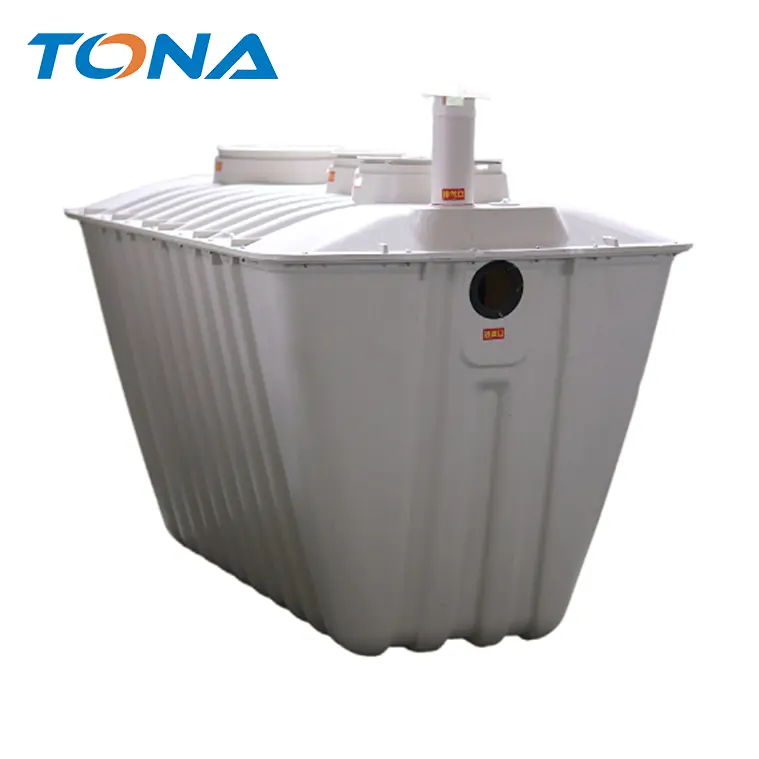
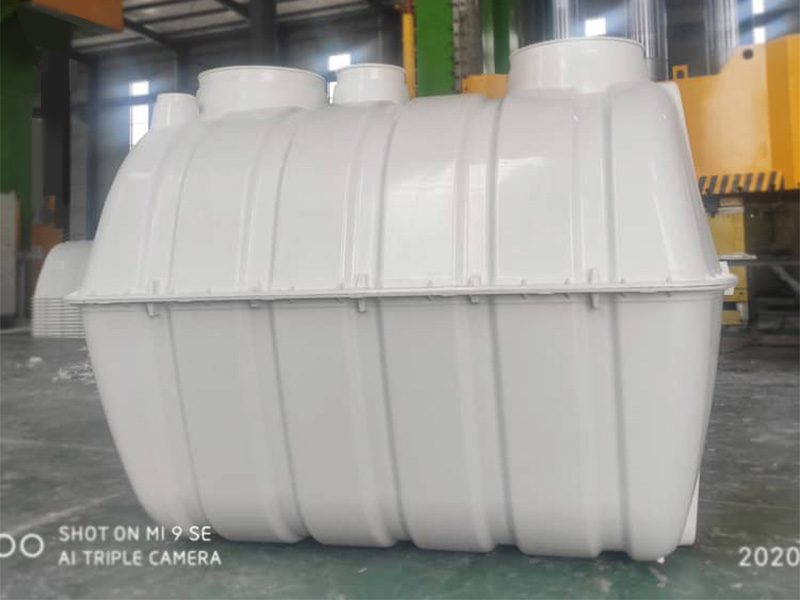
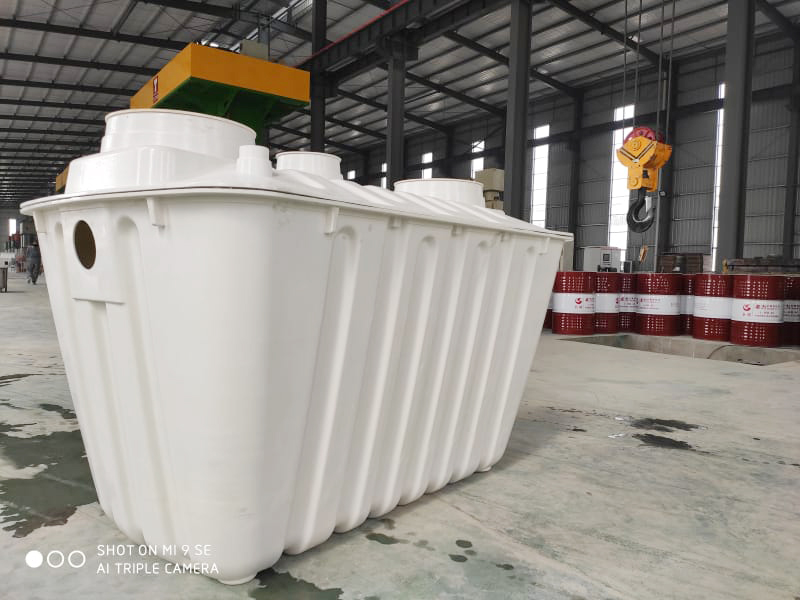
Fiberglass septic tanks are devices specifically designed for treating domestic sewage, made with synthetic resin as the matrix and glass fiber as the reinforcement. They are used in industrial enterprises’ living quarters and in civil buildings such as urban residential communities for the purification and treatment of domestic sewage. Fiberglass septic tanks temporarily store excrement, allowing it to undergo preliminary decomposition within the tank, thereby reducing the solid content in discharged sewage.
1. After backfilling to meet construction specifications, a cleaning well (inspection well) can be built on top of the tank. There are two types of cleaning wells: brick-built wells and precast reinforced concrete wells.
2. To prevent leakage from the brick-built well walls, the inner and outer walls of the inspection well must be plastered with a 20mm thick layer of waterproof mortar (1:2 waterproof mortar, containing 5 parts waterproofing agent by weight of cement). At the inside corners, a 45° bevel should be applied, 50mm thick. If groundwater is present, two coats of hot asphalt (or other waterproof coating) should be applied to the outer wall of the well, and then covered with soil up to the required ground level.
1. Geological conditions should be assessed before excavating the foundation trench.
2. The location and burial depth of the fiberglass septic tank should be strictly laid out and positioned according to the design requirements.
3. After the fiberglass septic tank is in place, backfill soil promptly and fill the tank with water to prevent displacement. The backfill soil should be sieved to remove sharp-edged stones and construction waste. If there is no groundwater, the soil density should be 0.95 and compacted. Pay special attention to filling the area around the tank with plain soil or yellow sand. If there is groundwater, fill the area under the tank with plain soil or yellow sand to ensure even stress distribution in the tank’s fixed position.
4. During rainy season construction, drainage facilities should be in place to prevent water accumulation in the foundation pit and slope collapse. The tank should also be filled with water to prevent floating and displacement.
5. Construction should be carried out in accordance with relevant engineering construction and acceptance specifications.
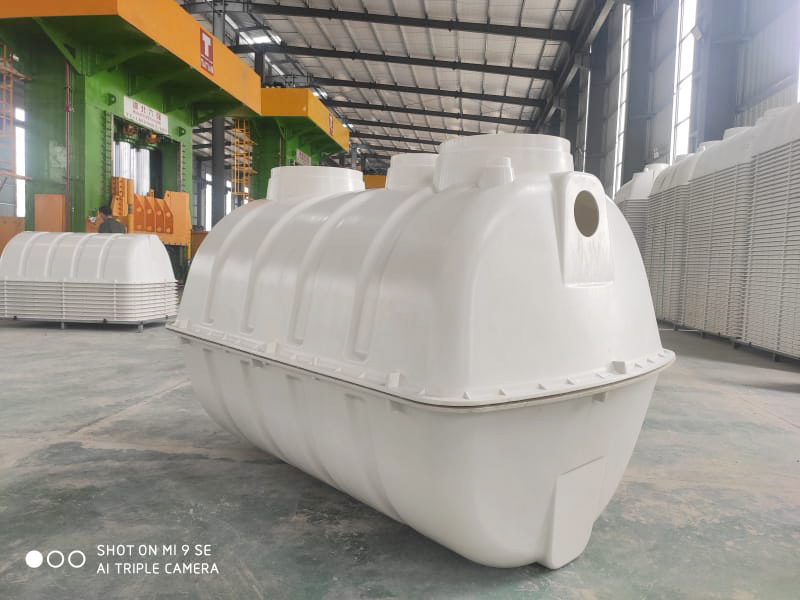
The positioning and layout of the fiberglass septic tank should be determined according to the engineering design drawings. The foundation pit should be excavated according to the dimensions provided for the selected model. When the foundation pit reaches the predetermined elevation, the ground soil cushion layer should be compacted, ensuring the foundation bearing capacity is not less than 100KN/㎡. A 500mm-100mm thick layer of yellow sand should then be used as a cushion layer, removing any large bricks, stones, or debris, and leveling and compacting it to prepare for the installation of the integral septic tank.
For fiberglass septic tank assembly installations or installations with groundwater and poor soil quality, a 100mm thick layer of pebbles or crushed stone should be laid and compacted. A 100mm-300mm C10 grade concrete cushion layer should be placed on top, followed by a 100mm sand cushion layer. The sides of the tank should be filled with plain soil.
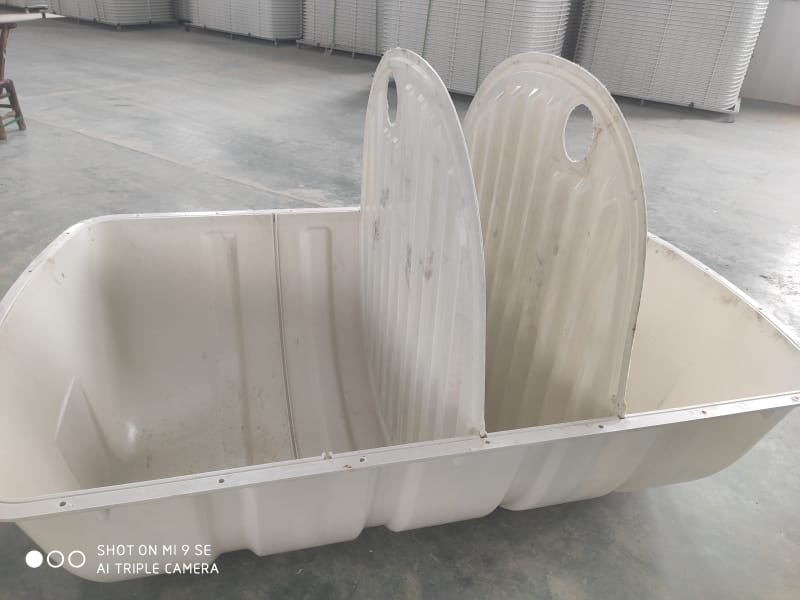
1. The base layer must be leveled before lifting and positioning.
2. Pay attention to the inlet and outlet directions of the septic tank during lifting.
3. The elevation of the septic tank must meet the engineering design requirements.
4. After lifting and positioning, adjust to ensure it is level.
After the fiberglass septic tank is lifted and positioned correctly, fill it with 1/3 clean water to stabilize it, then manually compact it. Backfilling is required after the fiberglass septic tank is in place. The bottom and surrounding area of the tank should be filled with sand (the height should be no less than half the tank diameter). Construction waste is strictly prohibited as backfill. Stones in the backfill should be removed. The backfill should be compacted in layers, with each layer 30mm thick. Manual compaction is preferred. Avoid strong impacts (such as pneumatic tampers) during backfilling; ensure the backfill around the tank is dense.