Your satisfaction is our relentless pursuit! We warmly welcome you to come and discuss business; we will serve you wholeheartedly.

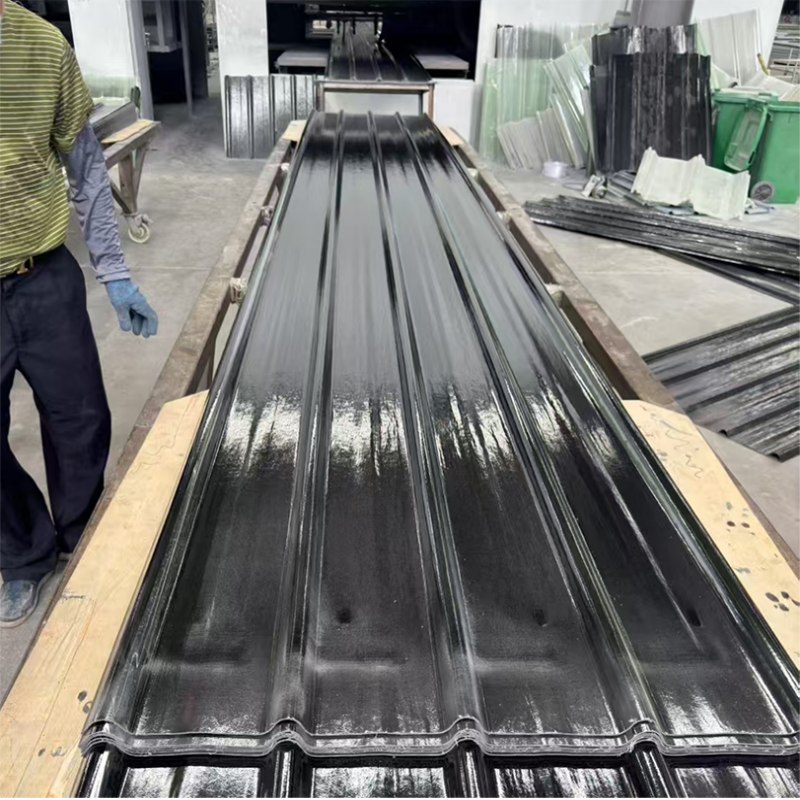
Resin tiles5
8 , April

Fiber-Reinforced Polymer (FRP) Composites Market Analysis by Mordor Intelligence

The Fiber-Reinforced Polymer Composites Market size is estimated at USD 83.17 billion in 2026, and is expected to reach USD 107.16 billion by 2031, at a CAGR of 5.20% during the forecast period (2026-2031). The expansion reflects ongoing bridge and road rehabilitation across mature economies, surging offshore-wind installations, and accelerating electric-vehicle (EV) lightweighting. Thermoset resins retained a 71.06% share in 2025, yet thermoplastics will grow at a 6.15% CAGR because automakers prefer recyclable matrices that fit circular-economy mandates. Glass fiber-reinforced polymer dominated 2025 volume with 91.18%, while carbon fiber-reinforced polymer will chart an 11.14% CAGR as aerospace and premium EV platforms demand structures offering specific stiffness above 180 GPa. Asia-Pacific led revenue with a 45.22% share in 2025, propelled by China’s 75 GW wind build-out and India’s USD 1.4 trillion infrastructure program, and will expand at 6.08% CAGR. Transportation end-user industry held 29.12% of 2025 revenue and will rise at 5.61% CAGR as European battery-electric registrations climbed to 22% in 2025, prompting metal-to-composite part substitution.   Key Report Takeaways   By resin type, thermoset led with 71.06% of fiber reinforced polymer composites market share in 2025; thermoplastic is forecast to grow at a 6.15% CAGR to 2031.   By fiber type, glass fiber-reinforced polymer (GFRP) captured 91.18% revenue share in 2025, while carbon fiber-reinforced polymer (CFRP) is projected to expand at an 11.14% CAGR through 2031.   By reinforcement form, rovings held 33.72% of the fiber reinforced polymer composites market size in 2025 and prepreg is advancing at a 6.26% CAGR to 2031.   By end-user industry, transportation accounted for 29.12% share of the fiber reinforced polymer composites market size in 2025 and is progressing at a 5.61% CAGR through 2031.   By geography, Asia-Pacific held 45.22% revenue share in 2025; the region is forecast to post the highest CAGR at 6.08% through 2031.   Note: Market size and forecast figures in this report are generated using Mordor Intelligence’s proprietary estimation framework, updated with the latest available data and insights as of January 2026.     https://www.mordorintelligence.com/industry-reports/fiber-reinforced-polymer-frp-composites-market
图片1 (1) (1)
26 , March

UAE company to invest $10m to produce fiber reinforced polymer products

Published : Tuesday, 24 February, 2026 at 12:00 AM  Count : 310 A UAE company will invest $10m in Bangladesh to manufacture fiber reinforced polymer (FRP) composite products, steel frame and accessories in at the BEPZA Economic Zone. Integrated Composite Industries Ltd, a UAE-Bangladesh joint venture company, has signed a land lease agreement with the Bangladesh Export Processing Zones Authority (BEPZA) at the BEPZA Complex in Dhaka on Sunday in this connection, says a press release. Executive Director (Investment Promotion) of BEPZA, signed the agreement on behalf of BEPZA, while Kamrul Hasan Chowdhury, Chairman of Integrated Composite Industries Ltd., signed on behalf of the investing company. BEPZA Executive Chairman Major General Mohammad Moazzem Hossain witnessed the signing ceremony. The company will manufacture modern bathtubs, jacuzzi, and panel tanks using FRP. To support this production, it will also develop various FRP composite products and accessories, including molds and patterns. The company plans to produce 6,174 metric tons of these products annually to meet the significant demand in the shipbuilding and cruise industries, with the majority of the output primarily destined for export to Dubai. This investment marks a significant step toward industrial diversification in Bangladesh, moving beyond traditional sectors into the specialized field of composite materials. With a proposed investment of $10 million, the company is expected to create employment opportunities for 906 Bangladeshi nationals. Welcoming the investor, the Executive Chairman of BEPZA reaffirmed BEPZA’s commitment to providing seamless facilitation and a supportive, investor-friendly environment to ensure the success of industrial ventures. He thanked Integrated Composite Industries Ltd. for coming forward with a diversified manufacturing initiative in the context of Bangladesh and expressed hope that such non-traditional, value-added products would contribute significantly to diversifying the country’s export basket. The ceremony was attended by Abdullah Al Mamun, Member (Engineering); A N M Foyzul Haque, Member (Finance); Samir Biswas, Executive Director (Administration); ASM Anwar Parvez, Executive Director (Public Relations); along with senior officials of BEPZA and representatives of Integrated Composite Industries.       https://www.observerbd.com/news/567319
rural septic tanks9
9 , February

What are the considerations behind the concept of effective volume of a septic tank?

In fact, volume is not a new concept. We consulted relevant materials and found that as early as the beginning of this century, the “Guidelines for Rural Environmental Sanitation Work” and the “Guidelines for Rural Sanitary Toilets in China” used the term “volume” when explaining the design principles and related parameters of three-compartment septic tank toilets. This is because for a three-compartment septic tank, only the lower edge of the overflow pipe is the actual storage space for feces and sewage; the part of the overflow pipe is an empty cavity that does not store feces and sewage. In this regard, the “Rural Household Toilet Hygiene Standards” stipulates that the volume of a three-compartment septic tank should be ≥1.5m³, referring to the storage space. The “Plastic Septic Tank” standard explicitly uses the term “volume.” In 2019, the “Requirements for Rural Household Toilet Construction (Trial Implementation)” jointly issued by the Ministry of Health and the Ministry of Agriculture and Rural Affairs reiterated the importance of volume in the three-compartment household toilet structure. Based on current understanding, some regions do not fully grasp this concept. Using the total volume of the septic tank instead of the actual volume would result in insufficient space for the harmless treatment of sewage, failing to achieve the desired treatment effect within the stipulated retention time. Therefore, this newly released standard explicitly uses volume as a metric, helping to ensure that sewage achieves the desired harmless treatment effect. Furthermore, the standard also provides reference values ​​for septic tank volume based on household size: ≥1.5m³ for households with 3 or fewer people; ≥2m³ for households with 4-6 people; and ≥2.5m³ for households with 7-9 people, facilitating selection by different regions.
rural septic tanks5
9 , February

Introduction to the installation method of three-compartment integrated septic tank for rural toilets

Many people nowadays pay great attention to life’s issues, and there are many important aspects to life. If one were to focus on everything, it would consume a lot of time, not to mention effort. Therefore, if you want to focus on one thing, you must first distinguish between them. You can look into what interests you, and if not, you can skip it. So, what is the installation method for a three-compartment integrated septic tank in rural toilets? How is a fiberglass septic tank used?   How to install a three-compartment integrated septic tank in a rural toilet? The process is as follows: Location and placement of the septic tank → Excavation of the foundation pit (with drainage) → Laying the foundation layer → Positioning the septic tank → Filling the septic tank with water → Symmetrical layered backfilling and compaction → Connecting the vent pipe → Constructing the inspection well → Acceptance. The positioning, burial depth, inlet and outlet pipe ends, and inspection wells for the integrated fiberglass septic tank should be determined according to design requirements. The bearing capacity of the foundation should not be less than 100KN/m²; otherwise, foundation treatment should be carried out, with specific measures determined by the designer. After excavating the foundation pit to the predetermined elevation (without disturbing the existing soil layer), if there is no groundwater, level the underlying layer of the foundation pit, and then lay a 150mm thick medium-coarse sand cushion layer as the foundation for the septic tank. If there is groundwater or during excavation, backfill with sand and gravel or crushed stone with a particle size not exceeding 40mm, with a compaction degree ≥95%. When the soil quality is poor, it is advisable to cast-in-place reinforced concrete foundations and determine the drainage measures to be taken when excavating the foundation pit, based on calculations.   How to use a three-compartment integrated septic tank in rural toilets? 1. The selection of fiberglass septic tanks is based on the specific building and the design parameters are calculated by the project designer. 2. The location of the fiberglass septic tank should, in principle, not affect the building foundation; generally, it should be no less than 10m away from drinking water reservoirs and no less than 30m away from underground water intake structures. When the building foundation plane is higher than the septic tank foundation plane, the distance from the outer wall of the septic tank should not be less than 2m. When the building foundation plane is lower than the septic tank foundation plane, the net distance from the outer wall of the septic tank to the outer wall of the building should not be less than 5m. 3. The integrated fiberglass septic tank should also be covered with soil at a depth of 0.3m. The soil cover should not exceed 3m. In cold regions, when the temperature is below -10℃, the soil cover depth of the septic tank should not be less than 12m. In areas where the average monthly temperature is less than -13℃, when considering the installation depth of the fiberglass septic tank, the designer should preferably place it below the frost line of the region. 4. Fiberglass septic tanks should be installed in green belts, lawns, or under sidewalks, with the soil cover not exceeding 1.5m; they can also be installed on roads.   5. Manhole Covers: When vehicles do not pass through, use lockable lightweight double-layer manhole covers and covers; when vehicles can pass through, use lockable heavy-duty double-layer covers. For fiberglass septic tanks, considering the needs of community greening or road/square paving, cast iron or polymer manhole covers are flush with the ground. In paved areas, the manhole cover can be appropriately lowered below the paving bricks, ensuring the paving bricks on the manhole cover can be opened when needed. The above mainly describes the installation method of a three-compartment integrated septic tank in rural toilets and how to use a fiberglass septic tank. Septic tanks are particularly important in rural toilets, and while the installation difficulty is not too high, the main focus is on certain components. Therefore, to understand these aspects, it is essential to first investigate the parts before mastering the installation method.

septic tank9
9 , February

How to determine the dimensions of a 1-2-3 compartment septic tank for rural toilet renovation?

1. The volume of a three-compartment septic tank should be ≥1.5m³. The volume ratio of compartments 1, 2, and 3 should be 2:1:3. If the width of the second compartment is less than 50cm, it can be increased to 50cm. The retention time for feces in the three-compartment septic tank should be: no less than 20 days for the first compartment, no less than 10 days for the second compartment, and the volume of the third compartment depends on the fertilization cycle, generally not less than the sum of the first and second compartments. 2. The depth of the three compartments should be the same and should not be less than 1000mm. The baffles inside the compartments should be securely and sealed to the tank body using grooves or similar methods to ensure no leakage between the compartments. 3. An inlet pipe should be installed between the toilet and the three-compartment septic tank. The inner wall of the inlet pipe should be smooth, with an inner diameter ≥100mm, and it should be short and straight, with an angle greater than 15° to the ground. The lower end of the inlet pipe should protrude approximately 50mm from the wall of the first compartment. 4. The overflow pipe is used to tightly connect the three-compartment septic tank and ensure smooth flow of sewage. 5. The overflow pipe should be made of smooth pipe with an inner diameter ≥ 100mm, and be installed in an I or inverted L shape. The inlet of the overflow pipe connecting the first and second compartments should be at the lower third of the first compartment wall, and the upper edge of the overflow pipe should be less than or equal to 60mm from the top of the compartment. The inlet of the overflow pipe connecting the second and third compartments can be at the lower third or half of the second compartment wall, and the overflow outlet is the same as the overflow pipe connecting the first and second compartments. The overflow pipes connecting the first and second compartments and the overflow pipes connecting the second and third compartments can be installed alternately. 6. The inlet channel is the passage connecting the toilet outlet to the septic tank. It can be directly constructed with cement bricks or connected with a 100mm inner diameter PVC plastic pipe. If the septic tank is outdoors, the toilet bowl is connected to the inlet pipe. The toilet bowl should be properly sealed. If the first chamber is indoors and a straight-through toilet is used, a 45-degree plastic elbow or trap should be installed to prevent sewage splashing and reduce odor from escaping from the first chamber. A suitable slope must be maintained during construction and installation to facilitate sewage flow. The inlet and outlet pipes should be staggered and kept at a certain distance. 7. The cover of the three-compartment septic tank must have maintenance openings for the first, second, and third compartments, and these openings should be sealed. The first compartment should have an inlet for waste disposal along its upper edge and a sludge removal opening on the top of its cover. The second compartment should have a sludge removal opening on the top of its cover, and the third compartment should have an outlet for waste disposal. The cover should be made of anti-aging materials such as fiberglass reinforced composite material or cast iron, and should have a locking device. 8. An exhaust pipe should be installed in the first compartment. The pipe should be circular with an inner diameter ≥75mm and extend 500mm above the toilet roof, or fitted with a rainproof (fly-proof, windproof) cap. 9. Arrangement of the three-compartment septic tanks: Rectangular septic tanks are commonly used because they extend the sedimentation time of waste, which is beneficial for harmless treatment. Other arrangements include triangular, square, and circular designs.
rural septic tanks5
9 , February

How about using septic tanks for toilets in rural areas?

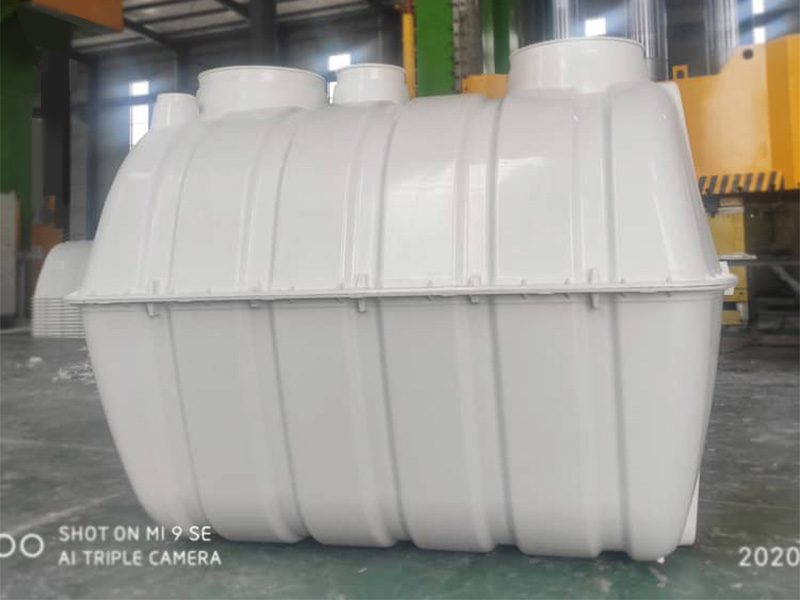
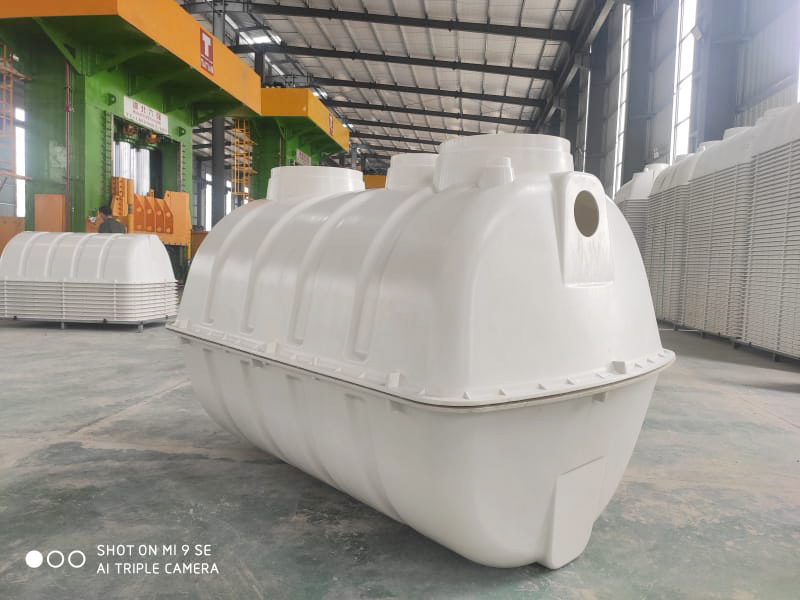
What are the best materials for septic tanks in rural toilets? The guidelines for rural toilet renovation state the following: Septic tanks in rural toilets should be made of harmless, corrosion-resistant materials with leak-proof properties, such as fiberglass. However, the choice of septic tank should be based on local conditions and the specific environment.
Products
Contacts
WhatsApp
Email
// //