9 , February
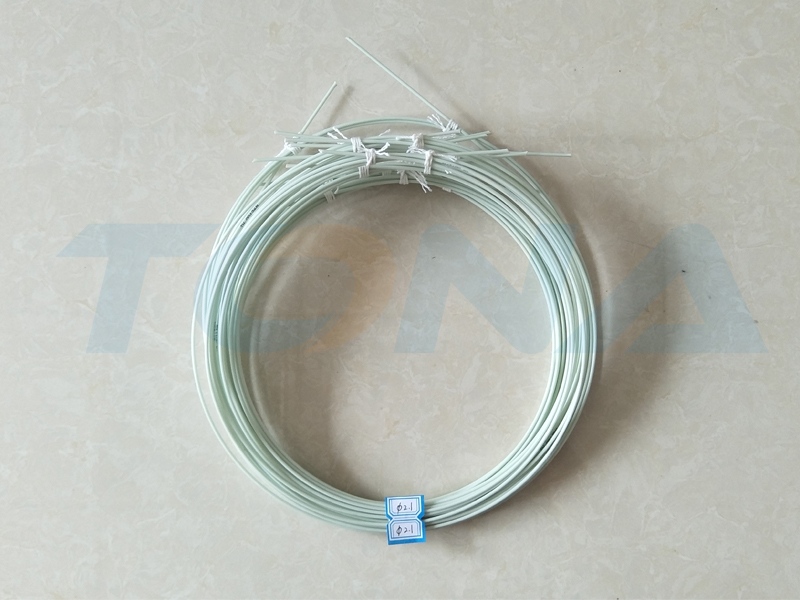
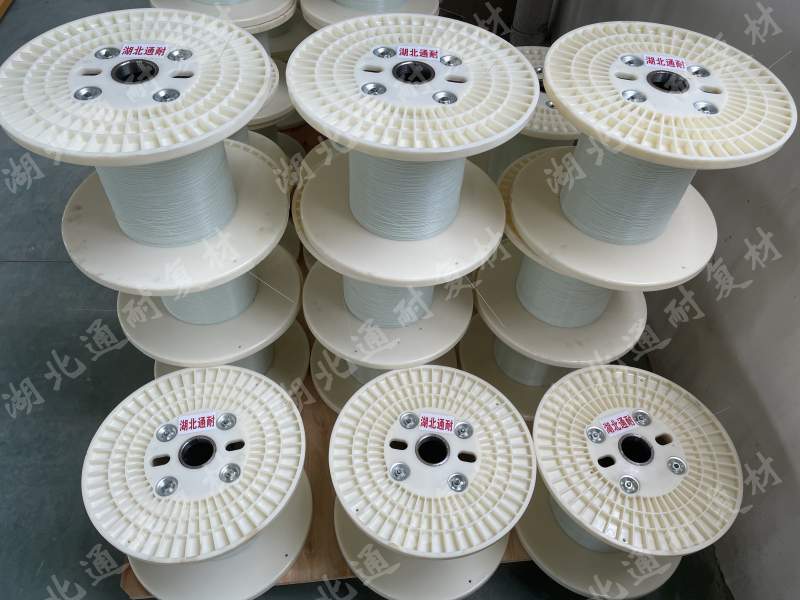
Untwisted glass fiber rovings form the supporting skeleton of fiber-reinforced composites, fundamentally determining the mechanical properties of pultruded products. They also influence impact toughness, reduce shrinkage, and affect the composite’s heat distortion temperature, electromagnetic properties, and thermophysical properties. Indeed, selecting appropriate linear density glass fibers and their volume fraction in the product are crucial to its mechanical properties.
As a composite material, selecting the right reinforcing material is only the first step in FRP (fiber-reinforced polymer) development. Composite materials are not simply physical combinations of several materials. To achieve good overall mechanical properties in FRP, a resin system that matches the reinforcing material must be selected. The resin matrix binds the reinforcing material into a unified whole, functioning to transfer and balance loads, allowing the reinforcing material to exert its mechanical property advantages. The composite material’s heat resistance, chemical corrosion resistance, weather resistance, electrical insulation, and electromagnetic properties all depend on the resin matrix. Furthermore, the resin matrix has varying degrees of influence on the composite material’s impact resistance and mechanical properties.