Your satisfaction is our relentless pursuit! We warmly welcome you to come and discuss business; we will serve you wholeheartedly.

Metal reinforcing core of optical fiber5
9 , February

Introduction to the types and uses of optical fiber cable reinforcing cores

The reinforcing core of an optical cable, as the name suggests, strengthens the cable. Generally, this strengthening effect includes increasing the cable’s radial tensile strength and bending resistance. The main materials for the reinforcing core of an optical cable include: Low-carbon galvanized steel wire, aramid fiber, and FRP (fiberglass reinforced plastic) reinforcing core. Their function is the same: increasing the cable’s tensile strength.
Metal reinforcing core of optical fiber4
9 , February

What are the functions of the reinforcing core in optical fiber cables?

Q: What are the functions of the fiber optic cable reinforcing core? A: The fiber optic cable reinforcing core enhances the strength of the fiber optic cable, protects the internal optical fibers from external forces, and maximizes the protection of the optical fibers inside the cable.
Metal reinforcing core of optical fiber3
9 , February

What role does the FRP (fiberglass reinforced plastic) core play in optical cables?

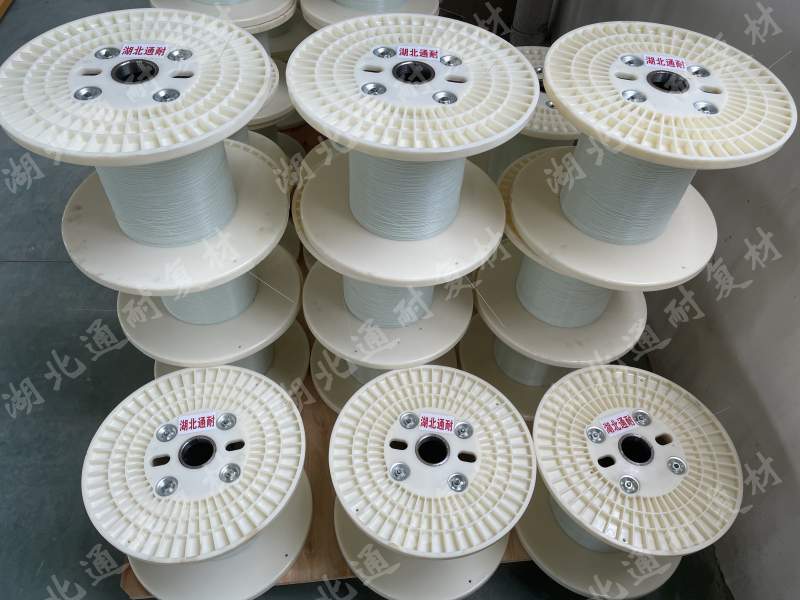
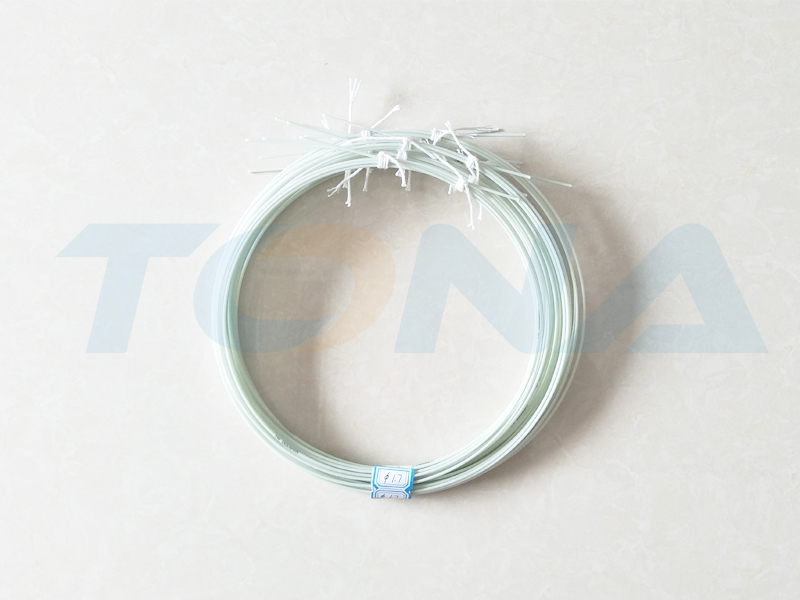
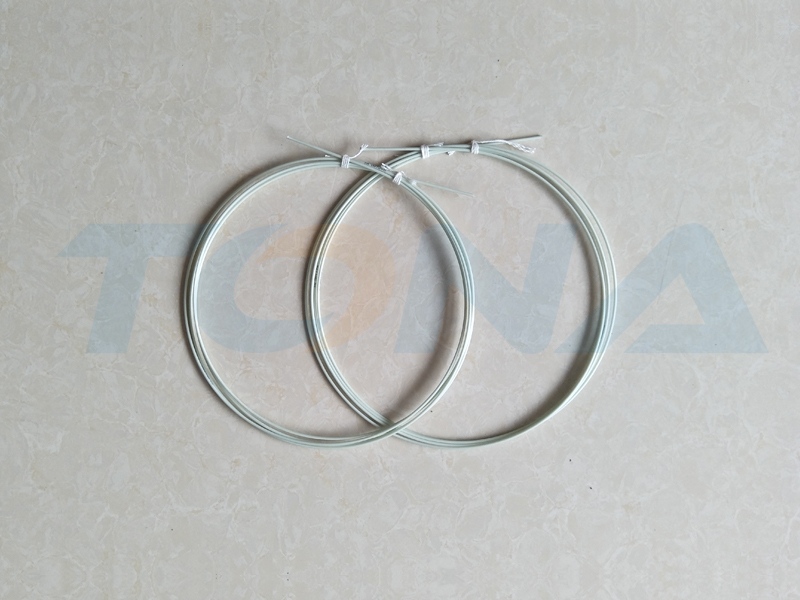
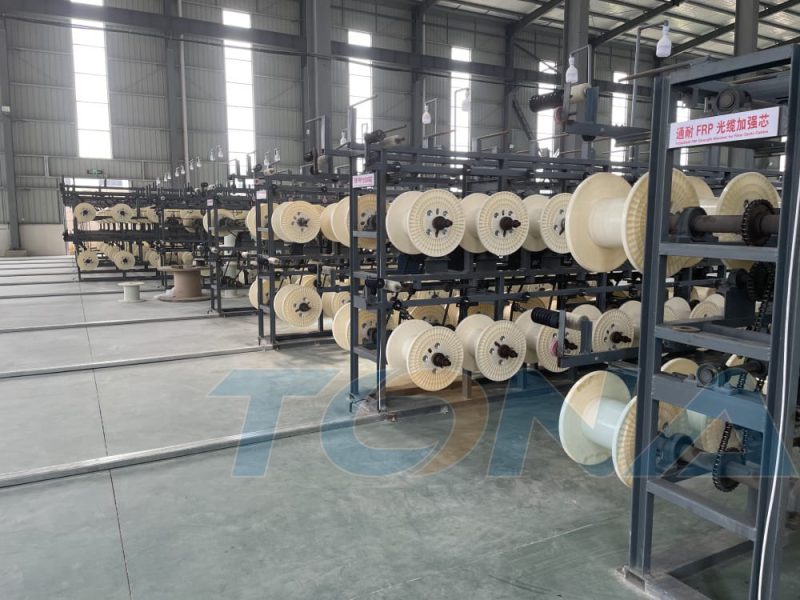
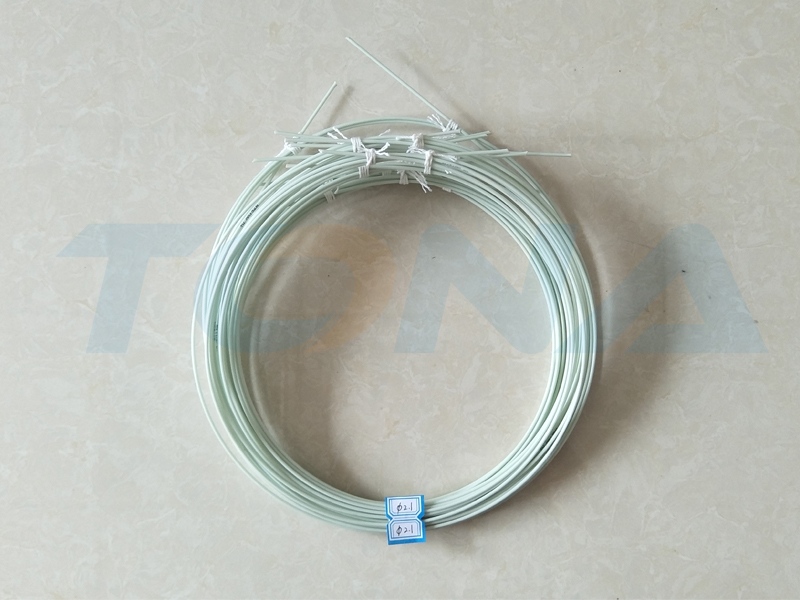
Materials are fundamental to optical cables; without good materials, high-quality optical cables cannot be made. The structural strength of the optical cable reinforcing core is a crucial indicator of its mechanical performance. The reinforcing core plays a vital role in protecting the optical cable structurally, and as one of the structural components that fixes the cable, it plays a major role in enhancing the cable’s tensile and compressive strength. Optical cable reinforcing cores are generally divided into metallic reinforcing cores and non-metallic reinforcing cores. Commonly used metallic reinforcing cores include single steel wires and steel strands. Commonly used non-metallic cores are fiber-reinforced plastics—glass fiber reinforced polymer (GFRP) and aramid fibers. GFRP is used in the cable core or on both sides of the cable core, while aramid fibers are used between the cable core and the sheath. For non-metallic FRP reinforcing cores, the key to producing qualified FRP lies in the rational selection of reinforcing materials, substrates, and curing processes. Tongnai Composites’ non-metallic FRP optical cable reinforcing cores are cylindrical rods formed by composite molding of resin as the substrate and glass fiber or aramid fiber as the reinforcing material. They are typically located at the center of the optical cable, with loose tubes and taut buffer fibers wound around the reinforcing core. FRP optical cable reinforcing cores combine the high performance of glass fiber and aramid fiber with a unique resin formula, resulting in a strong, high-energy, and economical optical cable reinforcement product. Tongnai Composites’ FRP optical cable reinforcing cores are specifically designed for fully insulated optical cable applications. They have a smooth surface, extremely high dimensional stability, and have achieved long-distance (50km) seamless production, enabling continuous production of optical cables. FRP optical cable reinforcing cores are insensitive to electrical shocks, avoiding interference from lightning strikes and strong electromagnetic fields, making them suitable for environments with frequent lightning and rain. Optical cables using KFRP (Knives-Fiber Reinforced Polymer) reinforcing cores can be installed close to power lines and equipment, unaffected by induced current interference from power lines or devices. Compared to metal cores, FRP reinforcing cores do not produce gases from the chemical reaction between metal and grease, thus avoiding impacts on fiber optic transmission performance. They also have a longer lifespan, higher tensile strength, and are lighter (approximately one-quarter the weight of steel wire), making them easier to process and lay. FRP reinforcing cores offer significant advantages and are increasingly used in various optical cable products, including outdoor cables, indoor cables, FTTx drop cables, and power cables. They are also used in other telecommunications fields.

Metal reinforcing core of optical fiber2
9 , February

What is the high temperature rating of the reinforcing core? Detailed explanation of different materials.

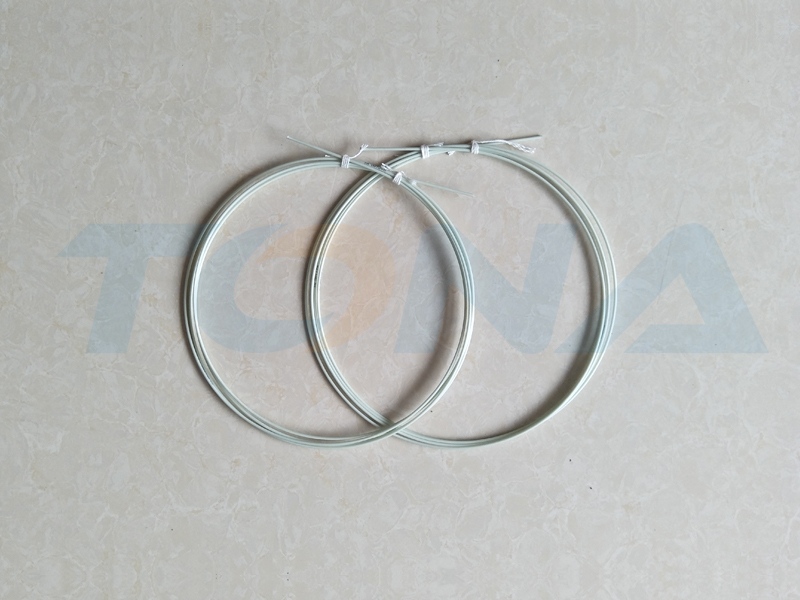
Generally, various reinforcing materials are used in the reinforcing core of optical cables, with stainless steel wire and FRP being the most common. The stainless steel wire used in optical cables and fiber optic sensors is mainly phosphated steel wire and galvanized steel wire. While these two materials can withstand general high temperatures, optical cables using these materials are usually not high-temperature cables and are mostly buried cables. FRP is also commonly used as a reinforcing core in optical cables. FRP is mainly composed of glass fiber and polymer adhesive. While the glass fiber is present, the polymer adhesive is not. Therefore, FRP material is generally not high-temperature resistant, but it can withstand medium to low temperatures of approximately 150 degrees Celsius.
Metal reinforcing core of optical fiber1
9 , February

Why can’t optical fiber cables for power communication use metal reinforcing cores?

Power lines can discharge through the metal reinforcing core, shattering the optical fiber and threatening the cable. The metal reinforcing core can also generate induced current, posing a threat to operators. I’ve seen strong induced currents where the reinforcing core discharged to ground, sparking, making it impossible for personnel to work on the connection. Therefore, power communication optical cables cannot use cables with metal reinforcing cores.  
Metal reinforcing core of optical fiber
9 , February

How to properly ground the metal reinforcing core of an optical fiber?

First, ground the cable, then use clamps to secure it to the grounding terminal. Also, there is a type called FRP (fiberglass reinforced plastic) non-metallic fiber optic cable reinforcing core, which is non-conductive, so grounding is not required, saving time and labor, and offering a long lifespan.
Products
Contacts
WhatsApp
Email