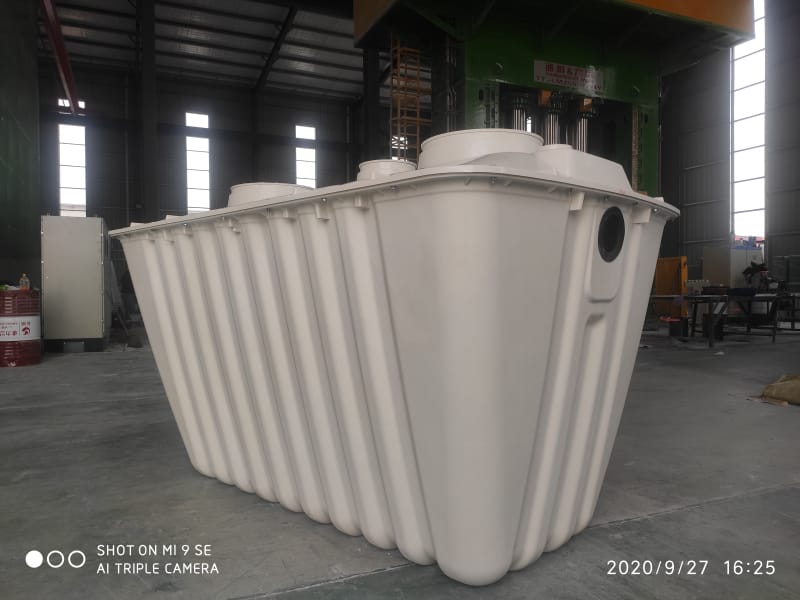
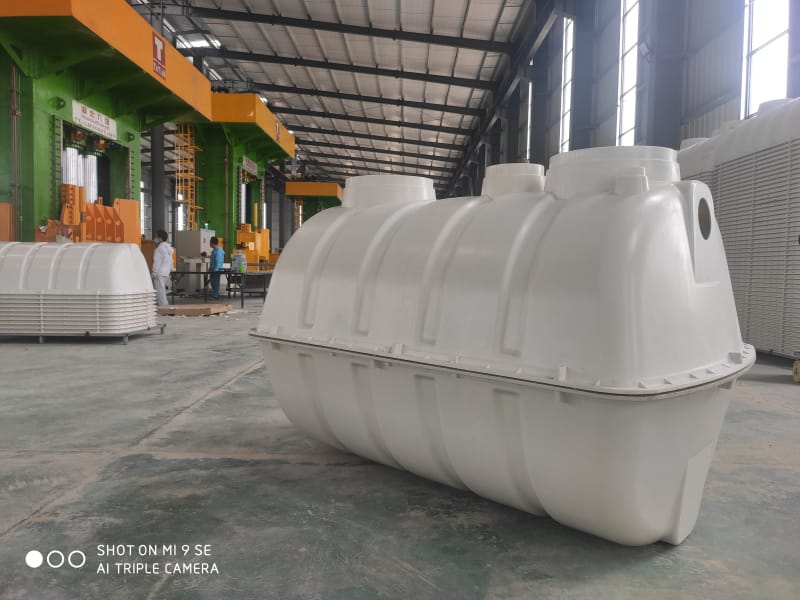
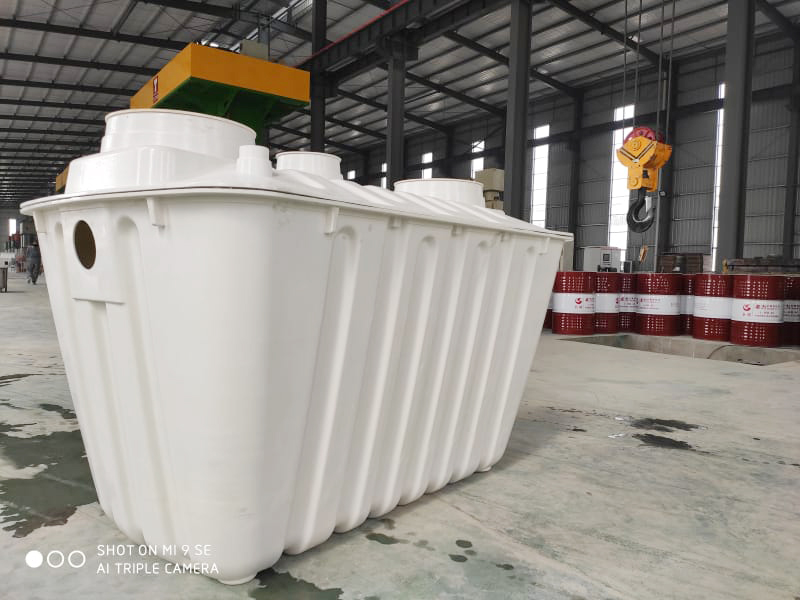
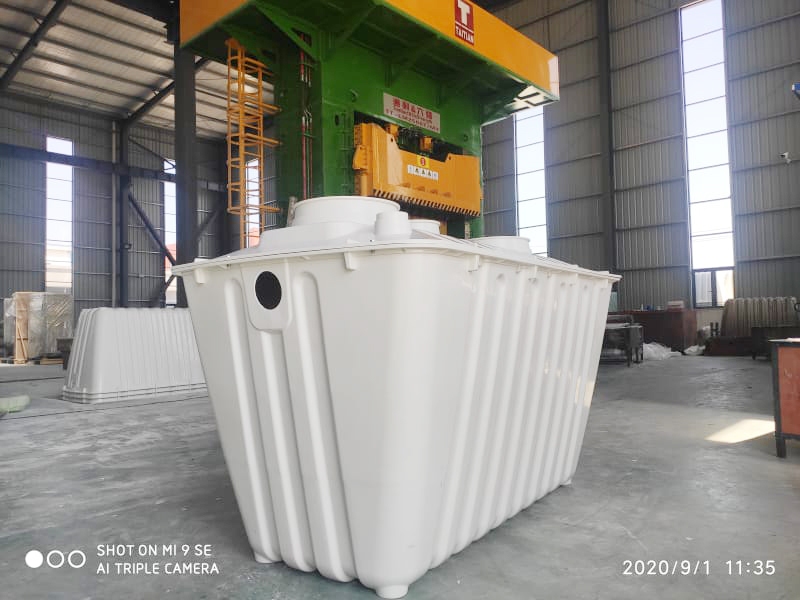
Your satisfaction is our relentless pursuit! We warmly welcome you to come and discuss business; we will serve you wholeheartedly.

septic tank12
9 , February

What are the differences between fiberglass septic tanks and reinforced concrete (commercial concrete) septic tanks, and which is more suitable for rural areas?

A septic tank is a device for treating and filtering feces. We all know that traditional septic tanks are reinforced concrete tanks, but newer fiberglass septic tanks are also very popular, especially in dry toilet renovation projects. So what are the differences between the two? Fiberglass Septic Tanks 1. Resistant to acids and alkalis, leak-proof; fiberglass is a relatively new material used in septic tanks. 2. Long service life, up to 50 years. 3. The pressure resistance of a fiberglass septic tank is typically equivalent to a 10-15 ton vehicle bay; with the addition of reinforced concrete pavement, design requirements can be met. 4. Quick construction; a single tank can generally be completed in about two days. 5. Long service life. 6. Low cost. Reinforced concrete (commercial concrete) septic tanks: 1. Mature application, comprehensive relevant standards, and reliable. 2. Relatively reliable compressive strength. 3. Slightly longer construction period, especially if the foundation has groundwater or construction is carried out during rainy weather, requiring more effort and attention. 4. Inferior corrosion resistance and leakage prevention performance compared to fiberglass septic tanks. 5. Significantly higher cost than fiberglass septic tanks. 6. Long service life.   In summary, the guiding document for rural toilet construction in Hunan Province stipulates that integrated three-compartment septic tanks should be made of harmless, corrosion-resistant, and leak-proof materials such as fiberglass. Reinforced concrete septic tanks do not meet this requirement, so fiberglass septic tanks are the better choice.
septic tank10
9 , February

Which is better, a three-compartment septic tank or a double-compartment septic tank?

Three-compartment fiberglass septic tanks can perform anaerobic fermentation and filter domestic sewage, making them suitable for the renovation of dry toilets in rural areas. It seems that three-compartment fiberglass septic tanks are widely used in the process of new rural construction. The basic principle of double-vault and three-compartment (modified three-compartment) septic tanks is to utilize the fact that parasite eggs have a higher specific gravity than the fecal-urine mixture, causing sedimentation, and employing principles such as anaerobic fermentation, liquefaction, ammoniation, and biological antagonism to remove and kill parasite eggs and pathogens, controlling mosquito and fly breeding. Three-compartment septic tanks utilize a three-compartment sewage treatment system, typically used in conjunction with flush toilets, and consist of an inlet pipe, compartments, a connecting pipe, and a cover. During use, they offer excellent leak-proof and rainwater-proof performance, with relatively good sealing. The inlet cover is appropriately sized, and there are no discomforts during use. They are of high quality and not easily damaged. Three-compartment septic tanks, to a certain extent, maintain a relatively calm sewage environment, reducing water pressure and preventing the dispersal of floating fecal scum, as well as preventing the uplift of sediment and parasite eggs from the bottom. They also prevent air surges that could cause blockages during sewage intake, thus reducing subsequent maintenance costs. A three-compartment septic tank is better. The structure and function of the third compartment in a three-compartment septic tank: The sewage flowing into the third compartment is generally already well-rotted, and pathogens and insect eggs have been largely killed and removed, making it suitable for fertilization. The primary function of the third compartment is sewage storage. The volume of the third compartment is mainly determined by the frequency and amount of fertilization each time. If the sewage from the third compartment is not used as fertilizer but is directly discharged for shallow soil filtration purification, the volume of the third compartment can be appropriately reduced. Furthermore, the third compartment can continue to function as the second compartment.
septic tank7
9 , February

Introduction to Septic Tank Construction Plan

Fiberglass septic tanks are devices specifically designed for treating domestic sewage, made with synthetic resin as the matrix and glass fiber as the reinforcement. They are used in industrial enterprises’ living quarters and in civil buildings such as urban residential communities for the purification and treatment of domestic sewage. Fiberglass septic tanks temporarily store excrement, allowing it to undergo preliminary decomposition within the tank, thereby reducing the solid content in discharged sewage. Fiberglass Septic Tank Construction Plan 1. After backfilling to meet construction specifications, a cleaning well (inspection well) can be built on top of the tank. There are two types of cleaning wells: brick-built wells and precast reinforced concrete wells.   2. To prevent leakage from the brick-built well walls, the inner and outer walls of the inspection well must be plastered with a 20mm thick layer of waterproof mortar (1:2 waterproof mortar, containing 5 parts waterproofing agent by weight of cement). At the inside corners, a 45° bevel should be applied, 50mm thick. If groundwater is present, two coats of hot asphalt (or other waterproof coating) should be applied to the outer wall of the well, and then covered with soil up to the required ground level. Construction Precautions 1. Geological conditions should be assessed before excavating the foundation trench. 2. The location and burial depth of the fiberglass septic tank should be strictly laid out and positioned according to the design requirements. 3. After the fiberglass septic tank is in place, backfill soil promptly and fill the tank with water to prevent displacement. The backfill soil should be sieved to remove sharp-edged stones and construction waste. If there is no groundwater, the soil density should be 0.95 and compacted. Pay special attention to filling the area around the tank with plain soil or yellow sand. If there is groundwater, fill the area under the tank with plain soil or yellow sand to ensure even stress distribution in the tank’s fixed position. 4. During rainy season construction, drainage facilities should be in place to prevent water accumulation in the foundation pit and slope collapse. The tank should also be filled with water to prevent floating and displacement. 5. Construction should be carried out in accordance with relevant engineering construction and acceptance specifications. Fiberglass Septic Tank Usage The positioning and layout of the fiberglass septic tank should be determined according to the engineering design drawings. The foundation pit should be excavated according to the dimensions provided for the selected model. When the foundation pit reaches the predetermined elevation, the ground soil cushion layer should be compacted, ensuring the foundation bearing capacity is not less than 100KN/㎡. A 500mm-100mm thick layer of yellow sand should then be used as a cushion layer, removing any large bricks, stones, or debris, and leveling and compacting it to prepare for the installation of the integral septic tank. For fiberglass septic tank assembly installations or installations with groundwater and poor soil quality, a 100mm thick layer of pebbles or crushed stone should be laid and compacted. A 100mm-300mm C10 grade concrete cushion layer should be placed on top, followed by a 100mm sand cushion layer. The sides of the tank should be filled with plain soil. Lifting Precautions 1. The base layer must be leveled before lifting and positioning. 2. Pay attention to the inlet and outlet directions of the septic tank during lifting. 3. The elevation of the septic tank must meet the engineering design requirements. 4. After lifting and positioning, adjust to ensure it is level.   After the fiberglass septic tank is lifted and positioned correctly, fill it with 1/3 clean water to stabilize it, then manually compact it. Backfilling is required after the fiberglass septic tank is in place. The bottom and surrounding area of ​​the tank should be filled with sand (the height should be no less than half the tank diameter). Construction waste is strictly prohibited as backfill. Stones in the backfill should be removed. The backfill should be compacted in layers, with each layer 30mm thick. Manual compaction is preferred. Avoid strong impacts (such as pneumatic tampers) during backfilling; ensure the backfill around the tank is dense.
septic tank5
9 , February

Construction process of fiberglass septic tank

Construction Process The construction process for fiberglass septic tanks is as follows: Positioning and layout → Excavation of the foundation pit → Treatment of the base layer → Equipment placement → Flushing the tank with water → Layered backfilling → Construction of connecting wells and inspection wells → Hardening the ground.   Main Construction Methods 1. Laying out lines and excavating trenches. According to the model of the fiberglass septic tank in the drawings, excavate the foundation trench according to the model dimensions, elevation, and marking lines, complying with all relevant construction specifications. In areas with high groundwater levels, drainage is required during trench excavation.   2. Treating the foundation bedding layer. The bearing capacity of the foundation at the fiberglass septic tank construction site should be no less than 100kN/㎡. If there is no groundwater, use a 200mm thick sand bedding layer. If there is groundwater or a soft base layer, first pour a C10 concrete bedding layer, then lay a 100mm thick sand bedding layer. In collapsible loess areas, construct a 300mm thick 3:7 lime-soil bedding layer, compacted in layers, with a compaction coefficient of no less than 0.95. During construction, avoid excavation; any excavation must be backfilled and compacted to ensure density. After the foundation bedding layer is treated, construct a 5cm-10cm sand bedding layer on top. The sand bedding layer must be free of grass roots and other organic debris.   3. Equipment Placement. After the fiberglass septic tank arrives on site, before placing it in place, check the surface for obvious quality defects such as cracks and scratches. Verify the accuracy of elevations at all points, and determine the correct inlet and outlet water directions (marked with arrows). Once confirmed, use a crane to lift the fiberglass septic tank into the prepared foundation trench. After placement, check that the elevations of the inlet and outlet pipes meet the design drawings, and that the horizontal water flow axis is aligned with the drainage pipe axis.     4. Water Filling. After the equipment is in place and meets the requirements, fill it with water. First, fill the tank to 1/3 of its height with water, and simultaneously surround the bottom of the fiberglass septic tank with soil to stabilize it. Then, fill the tank with water synchronously according to the backfill height, minimizing the impact force during backfilling.   5. Layered Backfilling. After installation and water filling, backfilling should be carried out promptly. The bottom 500mm on both sides should be filled with yellow sand and compacted (if the soil is clay, the entire area around the tank should be filled with yellow sand and compacted). When filling with sand, sprinkle water into the sand every 300mm and compact it. A plate vibrator can be used for compaction (see diagram). The backfill soil must not contain organic matter, frozen soil, or large hard lumps such as bricks or stones. Construction waste must not be used for backfilling; fine-grained soil should be used. Backfilling can be done in layers with a loose thickness of 250mm, preferably by manual compaction. Avoid forceful impacts or mechanical backfilling to prevent damage to the tank.   6. Construct connecting wells and inspection wells. When the backfill reaches a certain height, install inlet and outlet connecting wells and inspection wells. A concrete base layer must be constructed at the bottom of both wells to prevent damage to the fiberglass septic tank and pipes caused by uneven settlement of the foundation.   7. Harden the ground surface. When the fiberglass septic tank is located under a driveway or parking lot, the soil cover should be no less than 1.5m high and hardened. A reinforced concrete structure is recommended for hardening to reduce the load on the fiberglass septic tank.

septic tank2
9 , February

Pictures of septic tank pipe installation

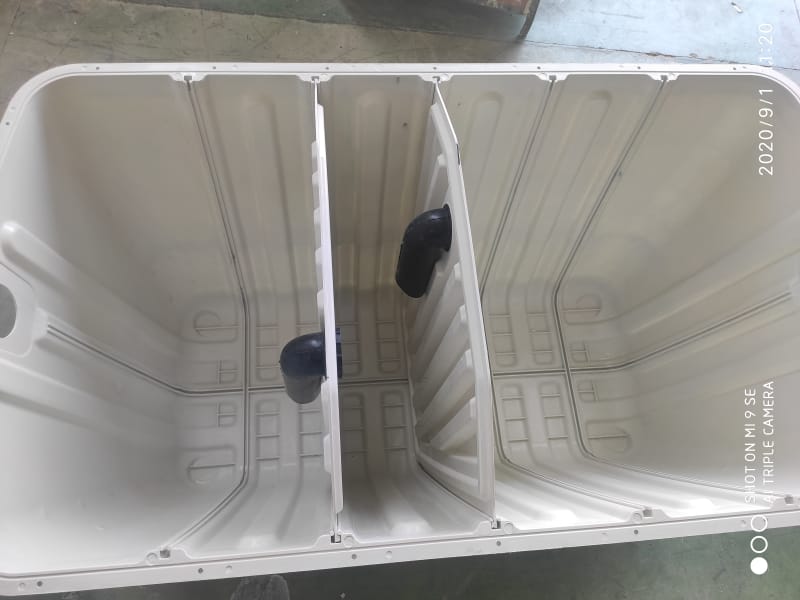
The septic tank partition has pre-drilled holes for installing sewage pipes; you can install it directly. Please refer to the image below.  
Reference value
9 , February

How is the size of a septic tank determined? What is the minimum size?

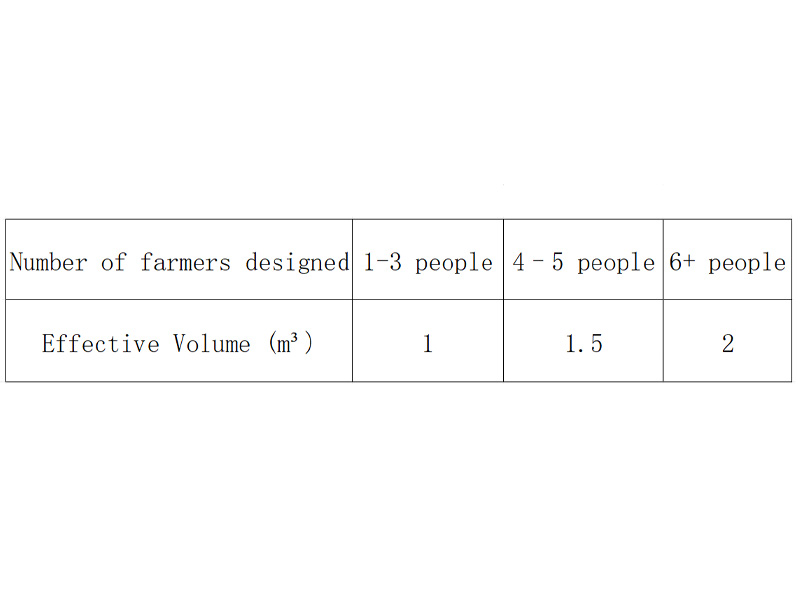
The calculation of septic tank usage is related to the following factors: the total number of people (N) in the septic tank design, the daily sewage quota (q) per person, the sewage retention time (t) in the septic tank, the percentage of people actually using sanitary appliances compared to the total number of people in the design, the sludge moisture content (b=95%), the concentrated sludge moisture content (c=90%), the sludge reduction coefficient (k=0.8) during the decomposition period, the septic tank cleaning cycle (T) determined by design for 90 days, 180 days, and 360 days, the volume coefficient of the digested sludge after cleaning (20%), and the sludge volume per person per day (a=0.7L/person.d) for combined sewer systems and (a=0.4L/person.d) for separate sewer systems.   The parameters are determined according to the standard GB50015-2003, pages 71-72. The volume (W) of a septic tank consists of the sewage volume (W1) and the sludge volume (W2). W1=N*q*t*α/(24*1000) W2=1.2*(a*N*α*T(1-b)*k)/((1-c)*1000) The exact number of sanitary fixtures cannot be accurately calculated for septic tanks; the total number of people must be determined first. The guidelines for rural toilet renovation provide suggestions for your reference.     Reference values ​​for the volume of three-compartment septic tanks in rural toilet renovation
Products
Contacts
WhatsApp
Email