Your satisfaction is our relentless pursuit! We warmly welcome you to come and discuss business; we will serve you wholeheartedly.

Metal reinforcing core of optical fiber6
9 , February

What are the characteristics of the reinforcing core of FRP optical cable?

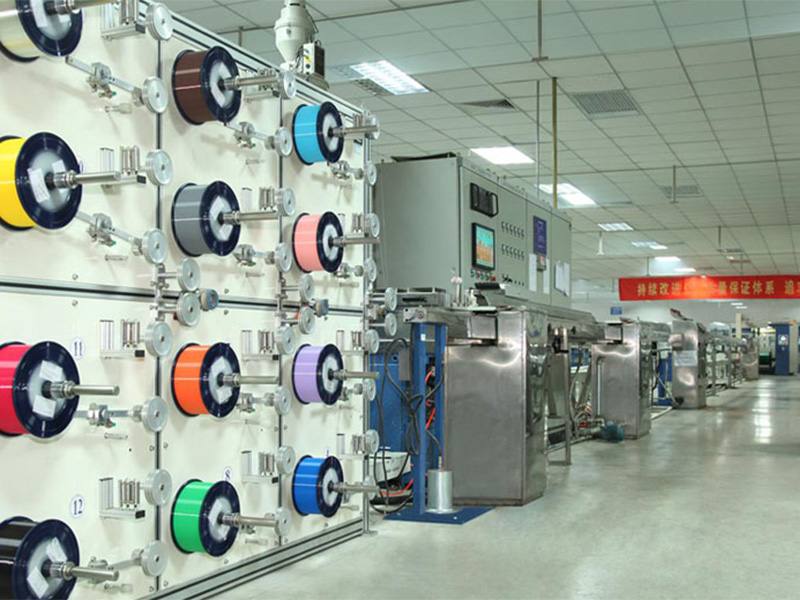
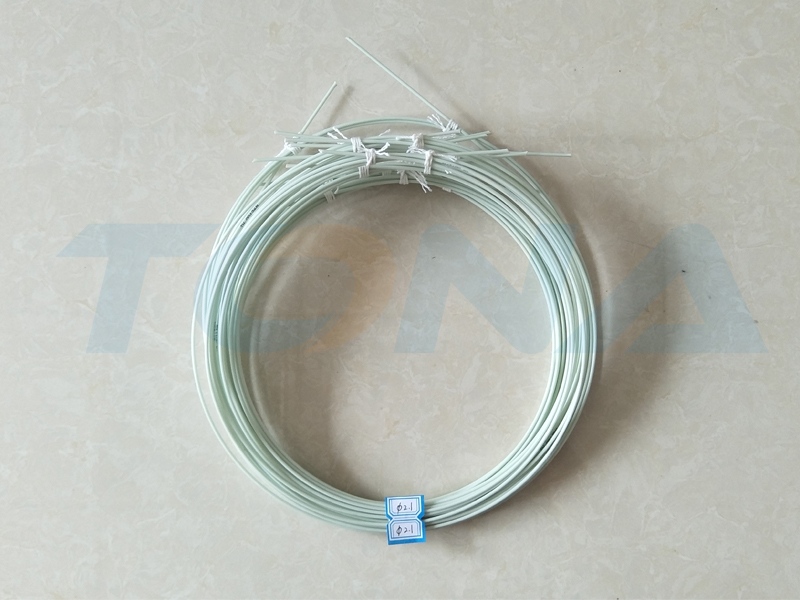
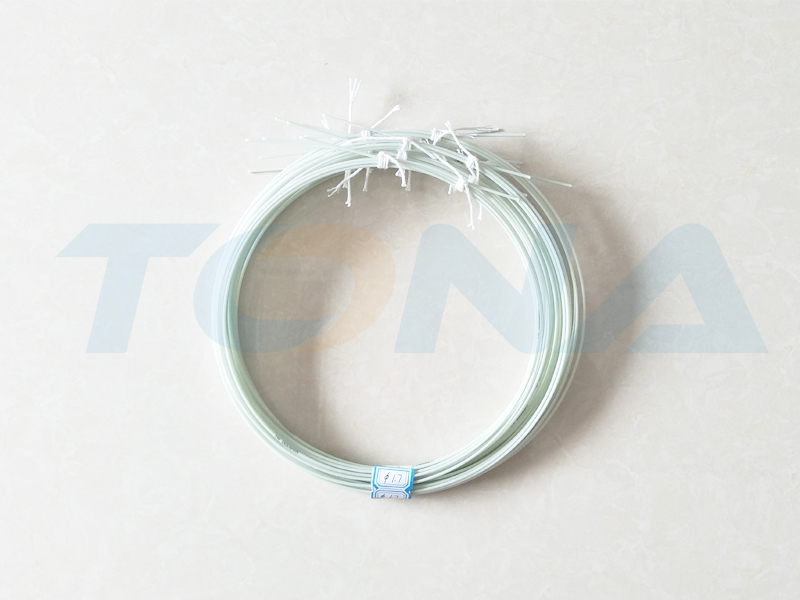
Glass fiber reinforced plastic (PRP) optical cable reinforcing core is a product made by curing and pultruding a resin system with glass fiber as the reinforcing material at a specific temperature. It has the following characteristics: 1. It is entirely dielectric, completely avoiding interference from lightning strikes and strong electromagnetic fields. 2. It is lightweight and high-strength; the specific gravity of FRP is about 1/4 that of steel wire, which can reduce the impact of icing and wind, while also reducing the load on towers and supports. 3. It is resistant to corrosion, has good compatibility with other optical cable materials, has a long lifespan, and does not produce harmful gases due to corrosion, thus avoiding hydrogen loss and affecting signal transmission performance. 4. It has a good surface finish, stable dimensions, and is easy to process and lay. 5. FRP is a composite material. To obtain high-quality FRP products, the key lies in the selection of raw and auxiliary materials and the reasonable monitoring of the molding process.
Metal reinforcing core of optical fiber1
9 , February

What are the factors affecting the molding and curing of the reinforcing core of FRP optical cable?

The process of material entering the curing mold, solidifying and shaping it within the mold, and then being pulled out is a crucial and primary step in the production of FRP (fiberglass reinforced plastic) optical cable reinforcing cores. The quality of PRP products largely depends on the mold, as a qualified mold guarantees the production of qualified products. In designing the molding mold, in addition to considering the geometric dimensions of the product’s cross-section, the following two factors should be primarily considered: 1.The chemical and physical characteristics of the resin system’s curing reaction; 2.The frictional properties between the pultruded material and the mold wall. In many cases, based on the resin’s reaction characteristics and related material properties, the mold is designed with three distinct heating zones: a preheating zone, a gelation zone, and a curing zone. The temperatures of these three zones are coordinated. While the temperatures of these three zones do not affect the surface quality of the product, they significantly influence its mechanical properties. Therefore, the control and distribution of the three heating zones in the mold must be strictly controlled.
Metal reinforcing core of optical fiber5
9 , February

How to select raw materials for the reinforcing core of FRP optical cables?

Untwisted glass fiber rovings form the supporting skeleton of fiber-reinforced composites, fundamentally determining the mechanical properties of pultruded products. They also influence impact toughness, reduce shrinkage, and affect the composite’s heat distortion temperature, electromagnetic properties, and thermophysical properties. Indeed, selecting appropriate linear density glass fibers and their volume fraction in the product are crucial to its mechanical properties. As a composite material, selecting the right reinforcing material is only the first step in FRP (fiber-reinforced polymer) development. Composite materials are not simply physical combinations of several materials. To achieve good overall mechanical properties in FRP, a resin system that matches the reinforcing material must be selected. The resin matrix binds the reinforcing material into a unified whole, functioning to transfer and balance loads, allowing the reinforcing material to exert its mechanical property advantages. The composite material’s heat resistance, chemical corrosion resistance, weather resistance, electrical insulation, and electromagnetic properties all depend on the resin matrix. Furthermore, the resin matrix has varying degrees of influence on the composite material’s impact resistance and mechanical properties.
Metal reinforcing core of optical fiber5
9 , February

Introduction to the types and uses of optical fiber cable reinforcing cores

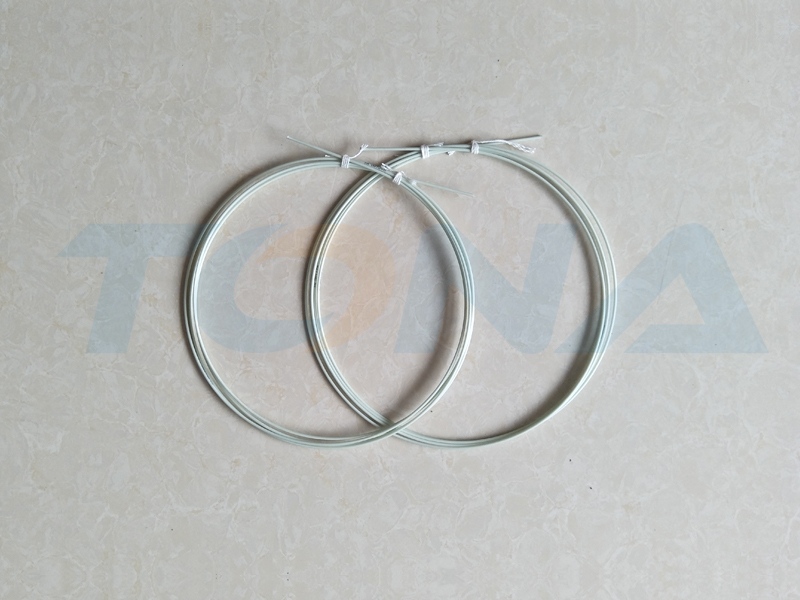
The reinforcing core of an optical cable, as the name suggests, strengthens the cable. Generally, this strengthening effect includes increasing the cable’s radial tensile strength and bending resistance. The main materials for the reinforcing core of an optical cable include: Low-carbon galvanized steel wire, aramid fiber, and FRP (fiberglass reinforced plastic) reinforcing core. Their function is the same: increasing the cable’s tensile strength.
Metal reinforcing core of optical fiber4
9 , February

What are the functions of the reinforcing core in optical fiber cables?

Q: What are the functions of the fiber optic cable reinforcing core? A: The fiber optic cable reinforcing core enhances the strength of the fiber optic cable, protects the internal optical fibers from external forces, and maximizes the protection of the optical fibers inside the cable.
Metal reinforcing core of optical fiber3
9 , February

What role does the FRP (fiberglass reinforced plastic) core play in optical cables?

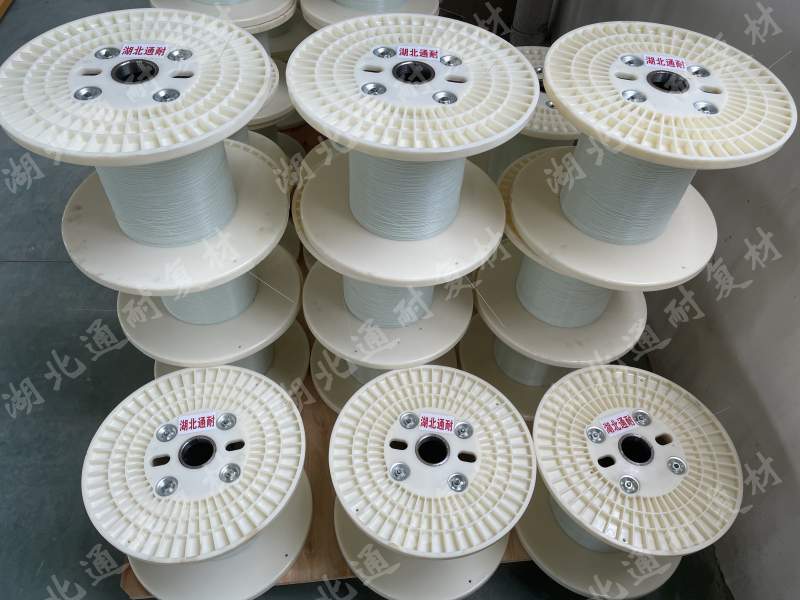
Materials are fundamental to optical cables; without good materials, high-quality optical cables cannot be made. The structural strength of the optical cable reinforcing core is a crucial indicator of its mechanical performance. The reinforcing core plays a vital role in protecting the optical cable structurally, and as one of the structural components that fixes the cable, it plays a major role in enhancing the cable’s tensile and compressive strength. Optical cable reinforcing cores are generally divided into metallic reinforcing cores and non-metallic reinforcing cores. Commonly used metallic reinforcing cores include single steel wires and steel strands. Commonly used non-metallic cores are fiber-reinforced plastics—glass fiber reinforced polymer (GFRP) and aramid fibers. GFRP is used in the cable core or on both sides of the cable core, while aramid fibers are used between the cable core and the sheath. For non-metallic FRP reinforcing cores, the key to producing qualified FRP lies in the rational selection of reinforcing materials, substrates, and curing processes. Tongnai Composites’ non-metallic FRP optical cable reinforcing cores are cylindrical rods formed by composite molding of resin as the substrate and glass fiber or aramid fiber as the reinforcing material. They are typically located at the center of the optical cable, with loose tubes and taut buffer fibers wound around the reinforcing core. FRP optical cable reinforcing cores combine the high performance of glass fiber and aramid fiber with a unique resin formula, resulting in a strong, high-energy, and economical optical cable reinforcement product. Tongnai Composites’ FRP optical cable reinforcing cores are specifically designed for fully insulated optical cable applications. They have a smooth surface, extremely high dimensional stability, and have achieved long-distance (50km) seamless production, enabling continuous production of optical cables. FRP optical cable reinforcing cores are insensitive to electrical shocks, avoiding interference from lightning strikes and strong electromagnetic fields, making them suitable for environments with frequent lightning and rain. Optical cables using KFRP (Knives-Fiber Reinforced Polymer) reinforcing cores can be installed close to power lines and equipment, unaffected by induced current interference from power lines or devices. Compared to metal cores, FRP reinforcing cores do not produce gases from the chemical reaction between metal and grease, thus avoiding impacts on fiber optic transmission performance. They also have a longer lifespan, higher tensile strength, and are lighter (approximately one-quarter the weight of steel wire), making them easier to process and lay. FRP reinforcing cores offer significant advantages and are increasingly used in various optical cable products, including outdoor cables, indoor cables, FTTx drop cables, and power cables. They are also used in other telecommunications fields.

Products
Contacts
WhatsApp
Email